

Big visibility update


Extended fleet visibility
Now players will be able to see not only the fleets that are connected with coordinates of their objects, but also all fleets that are connected (i.e. have start or end point on those coordinates) anywhere in the visible space. Shared vision from friends or allies will also show connected fleets.
Information about these “extra” fleets will only be shown in galaxy view, they will not be displayed in the list of fleets in flight. Their tracks in galaxy would be translucent to reduce visual clutter.
If a fleet includes Arbiters, its composition will not be visible, only the presence of an Arbiter would be shown.
Sensor Phalanx rework
Because there's no more need of “fleet scanning”, the functionality of phalanx is changed. Now it can be used to temporarily grant visibility of distant solar systems:
· scanning a solar system will make all its coordinates visible for 1 hour,
· radius is extended to 10000*[level],
· scanning cost is changed to 10000*[level^0.5].
Costs of shared vision
Since sharing the visibility between friends and allies is now granting big strategic advantage, it will now be more vulnerable:
· Humans will need to have Broadcast stations (previously — Alliance Depot) built on their objects. The station can be destroyed in combat.
· Xerjs will need Sensor Spore Colonies to share vision (other sources, like Periscope, will only give personal visibility in the absence of SSCs). Colonies no longer can be “turned off” and protected from destruction.
· Tosses will need Psi Fields Concentrator.
Besides of the vulnerability for enemy attacks, these buildings/defenses will now consume Vespene gas. If gas runs out, visibility sharing will stop. Total broadcast cost will be proportional to the number of receivers of your vision data, so sharing it with a big alliance may become costly. Conversely, if you don't share vision with anybody, no gas will be consumed on that object.
Different races will have different costs for broadcast (Vespene/hour per each receiver):
· For humans: 50-12 depending on Broadcast station level (the higher it is — the lower the consumption).
· For zerjs: 10-25 depending on SSC count (the higher it is — the higher the consumption).
· For tosses: 20.
Total cost could be seen on the Resources page:

Shared vision settings can be changed on the object's properties page.
New alliance roles
To help balancing the vision of the territory and the costs of broadcasting it, alliance leaders can now employ two new privileges. First one — the “overseer” status — will force other players share vision with all overseers in the alliance even if they turned it off for allies. This would allow a select group of active players to maintain control over territory without forcing other players to share vision with everyone else. Another privilege — the exemption from forced sharing — will allow designated players to turn off vision sharing even for overseers. This could be done to help weaker players or to remove redundancies in densely populated sectors where many players share vision of the same systems.
New players settlement
Newly registered players will no longer be settled in systems that belong to any alliance. The zone for random settlement was extended.
Allied defense
All objects (not just satellites) can now be defended by friends and allies without requiring any special buildings.
Balance changes
· Psi disrupter: cost changed to 10000/6000/0, CRP 2.5, requirements changed to Research lab level 2.
· Xerj SSCs: damage drastically reduced, added Dark Swarm ability.
· Detection technology: requirements changed to Computer technology level 3.
Now players will be able to see not only the fleets that are connected with coordinates of their objects, but also all fleets that are connected (i.e. have start or end point on those coordinates) anywhere in the visible space. Shared vision from friends or allies will also show connected fleets.
Information about these “extra” fleets will only be shown in galaxy view, they will not be displayed in the list of fleets in flight. Their tracks in galaxy would be translucent to reduce visual clutter.
If a fleet includes Arbiters, its composition will not be visible, only the presence of an Arbiter would be shown.

Sensor Phalanx rework
Because there's no more need of “fleet scanning”, the functionality of phalanx is changed. Now it can be used to temporarily grant visibility of distant solar systems:
· scanning a solar system will make all its coordinates visible for 1 hour,
· radius is extended to 10000*[level],
· scanning cost is changed to 10000*[level^0.5].
Costs of shared vision
Since sharing the visibility between friends and allies is now granting big strategic advantage, it will now be more vulnerable:
· Humans will need to have Broadcast stations (previously — Alliance Depot) built on their objects. The station can be destroyed in combat.
· Xerjs will need Sensor Spore Colonies to share vision (other sources, like Periscope, will only give personal visibility in the absence of SSCs). Colonies no longer can be “turned off” and protected from destruction.
· Tosses will need Psi Fields Concentrator.
Besides of the vulnerability for enemy attacks, these buildings/defenses will now consume Vespene gas. If gas runs out, visibility sharing will stop. Total broadcast cost will be proportional to the number of receivers of your vision data, so sharing it with a big alliance may become costly. Conversely, if you don't share vision with anybody, no gas will be consumed on that object.
Different races will have different costs for broadcast (Vespene/hour per each receiver):
· For humans: 50-12 depending on Broadcast station level (the higher it is — the lower the consumption).
· For zerjs: 10-25 depending on SSC count (the higher it is — the higher the consumption).
· For tosses: 20.
Total cost could be seen on the Resources page:

Shared vision settings can be changed on the object's properties page.
New alliance roles
To help balancing the vision of the territory and the costs of broadcasting it, alliance leaders can now employ two new privileges. First one — the “overseer” status — will force other players share vision with all overseers in the alliance even if they turned it off for allies. This would allow a select group of active players to maintain control over territory without forcing other players to share vision with everyone else. Another privilege — the exemption from forced sharing — will allow designated players to turn off vision sharing even for overseers. This could be done to help weaker players or to remove redundancies in densely populated sectors where many players share vision of the same systems.
New players settlement
Newly registered players will no longer be settled in systems that belong to any alliance. The zone for random settlement was extended.
Allied defense
All objects (not just satellites) can now be defended by friends and allies without requiring any special buildings.
Balance changes
· Psi disrupter: cost changed to 10000/6000/0, CRP 2.5, requirements changed to Research lab level 2.
· Xerj SSCs: damage drastically reduced, added Dark Swarm ability.
· Detection technology: requirements changed to Computer technology level 3.
22 Декабря 2025 11:07:25

Название этого канала — «Баланс».
Вы перепутали его с «Дисбалансом».
Отстраненность от игроков просто поразительна.
Вы перепутали его с «Дисбалансом».
Отстраненность от игроков просто поразительна.
22 Декабря 2025 11:58:26




Так что если я правильно это прочитал;
Игроки, достаточно большие, чтобы поддерживать станцию с фалангой, могут видеть любой флот в любом месте.
Единственная защита для меньшего игрока заключается в том, чтобы надеяться, что у них, их союзников и их друзей не хватит топлива, чтобы отреагировать, или они слишком боятся ещё более крупных китов.
Я хотел бы сказать, что я мог бы построить аналогичную станцию, но существует репрессивный альянс, который уничтожит большинство лун, прежде чем я смогу завершить станцию, и если бы я это сделал, пушки 40 000 игроков в любом случае растаяли бы за несколько часов. Не то чтобы удостоверение личности представляло большую угрозу, если бы я нашёл их флот.
Моя следующая стоимость обновления составляет 560 000 000 рез, которые я, очевидно, не могу накопить на планете, так что это является целью.
Так что очевидный лучший путь - не летать и не иметь ресурсов.
Но что это за игра? Я могу легко сделать это в реальной жизни.
So if I read this correctly;
Players large enough to maintain a station with phalanx can see any fleet anywhere.
The only defense for a smaller player is to hope they, their allies, and their friends have not enough fuel to respond or are too afraid of even bigger whales.
Id like to say l could build a similar station, but there is an opressive alliance that will destroy most moons before I could complete a station and if I did the guns of the 40,000pt players would melt ot in a few hours anyway. Not that id be a big threat if i did find their fleet.
My next upgrade cost is 560,000,000 res which i obviously cannot save up on a planet so that is out as an objective.
So the obvious best path is to not fly and not have resources.
But what kind of game is that? I can easily do it in real life.
Игроки, достаточно большие, чтобы поддерживать станцию с фалангой, могут видеть любой флот в любом месте.
Единственная защита для меньшего игрока заключается в том, чтобы надеяться, что у них, их союзников и их друзей не хватит топлива, чтобы отреагировать, или они слишком боятся ещё более крупных китов.
Я хотел бы сказать, что я мог бы построить аналогичную станцию, но существует репрессивный альянс, который уничтожит большинство лун, прежде чем я смогу завершить станцию, и если бы я это сделал, пушки 40 000 игроков в любом случае растаяли бы за несколько часов. Не то чтобы удостоверение личности представляло большую угрозу, если бы я нашёл их флот.
Моя следующая стоимость обновления составляет 560 000 000 рез, которые я, очевидно, не могу накопить на планете, так что это является целью.
Так что очевидный лучший путь - не летать и не иметь ресурсов.
Но что это за игра? Я могу легко сделать это в реальной жизни.
So if I read this correctly;
Players large enough to maintain a station with phalanx can see any fleet anywhere.
The only defense for a smaller player is to hope they, their allies, and their friends have not enough fuel to respond or are too afraid of even bigger whales.
Id like to say l could build a similar station, but there is an opressive alliance that will destroy most moons before I could complete a station and if I did the guns of the 40,000pt players would melt ot in a few hours anyway. Not that id be a big threat if i did find their fleet.
My next upgrade cost is 560,000,000 res which i obviously cannot save up on a planet so that is out as an objective.
So the obvious best path is to not fly and not have resources.
But what kind of game is that? I can easily do it in real life.
22 Декабря 2025 17:18:28


Somebody wants to ruin this game. This update is literally the worst from several technical /implementation points - I mean bugs introduced by coders. Secondly - is not improving game-play or making it more interesting. Actually making it even worse than "fog of war".
Why changing the purpose of buildings??? You know.. lets change purpose of neural core and research facility - they will eat lurkers / colony ships in a system. Level of building determines number of lurker/colony/sover ships destroyed with no return. Random target per hour, from random player, level of building * 1000 distance is a random object maximum distance.
Why changing the purpose of buildings??? You know.. lets change purpose of neural core and research facility - they will eat lurkers / colony ships in a system. Level of building determines number of lurker/colony/sover ships destroyed with no return. Random target per hour, from random player, level of building * 1000 distance is a random object maximum distance.
24 Декабря 2025 09:52:08
Цитата: soccer
Why changing the purpose of buildings??? You know.. lets change purpose of neural core and research facility - they will eat lurkers / colony ships in a system. Level of building determines number of lurker/colony/sover ships destroyed with no return. Random target per hour, from random player, level of building * 1000 distance is a random object maximum distance.
This is an interesting idea, but a bit raw. No sarcasm, we were looking into different options for “preemptive defense” in the past, like abducting or destroying ships from fleets in flight. No plans to use mechanics like that right now, though.
24 Декабря 2025 17:38:43
The game getting worst and worst... people make it more easy to smaller players otherwise you will left only with some big players..
24 Декабря 2025 21:51:52
UncleanOne,
This is an interesting idea, but a bit raw. No sarcasm, we were looking into different options for “preemptive defense” in the past, like abducting or destroying ships from fleets in flight. No plans to use mechanics like that right now, though
This is an interesting idea, but a bit raw. No sarcasm, we were looking into different options for “preemptive defense” in the past, like abducting or destroying ships from fleets in flight. No plans to use mechanics like that right now, though
Tell that to the accumulated ammortization collector.
26 Декабря 2025 22:02:30
Цитата: Sheepleville
Tell that to the accumulated ammortization collector.
That's “limiting the steamroller”, not “preemptive defense”.
26 Декабря 2025 22:15:00
Thank you for your efforts, but I deleted my account after 5 years of playing following the latest improvements.😍😂😅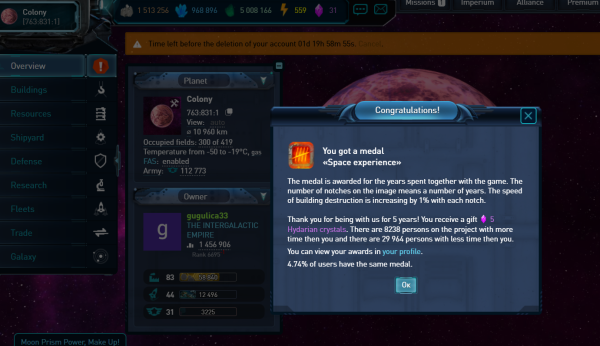
of course, I abandoned all the planets, stations, resources beforehand. Good luck!
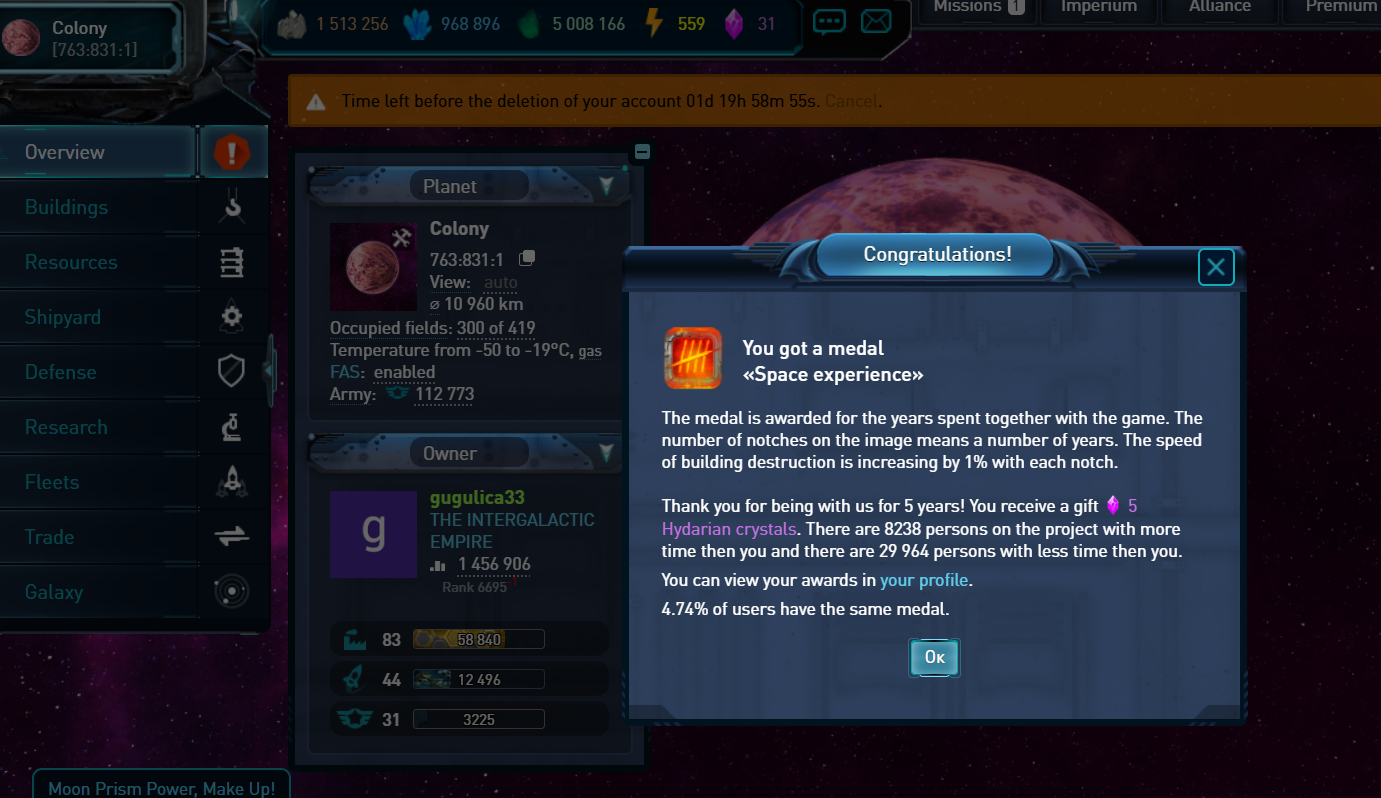
of course, I abandoned all the planets, stations, resources beforehand. Good luck!
28 Декабря 2025 02:39:01
I have cancelled my premium subscription as well - I do not like paying for stupidity....
30 Декабря 2025 02:21:54

Can we have some features such as
Hide fleet visibility of friendly/allied units
Hide fleet visibility of Phoenix units
Hide fleet visibility of Overmind units
Hide fleet visibility of friendly/allied units
Hide fleet visibility of Phoenix units
Hide fleet visibility of Overmind units
30 Декабря 2025 20:42:17
UncleanOne,
my post was sarcasm. recent changes over the years render the game unplayable. At least its not something where I come to get rest after work for a while. I spend more time on paper-io game than here.
changing/renaming buildings in terran or repurposing sensor spore colony - which cannot be destroyed other way than prepared friendly fire... all that eating basicaly all my gas... bases naked... and even visible to enemies...
should I name few changes?
- reduction of pirates. amortization. reduction of pirate size. fog of war. alliance network reworks years ago, encirclement... impossible to conquer pirate ops. or ops from other players now. fleet hiding in expedition, or in high orbit ops... ultra stupid wide range of who can attack who - although I understand 10 milion players and above would have harder time to find targets... but they should be able to drop weight... and fight again. reworking expeditions research or colonization...? thats certainly not an exhaustive list of game mechanics... remember warmup times, number of fleets going down.. but making it impossible to hide them and as if not enough - reveal them using this visibility change... thats just ruining game mechanics for players... ouch, market reachability? I seriously doubt numbers of how much goods/fleet is traded now.
removal of old style building page. you know what surprise it was seeing my buildings scattered around randomly when you removed it? also - imperium page rework just makes for visualy impaired people interface less and less appealing. however, fleet page replacing standard listbox for fleet target from own objects - which could be operated by keyboard - with custom built element showing the planet icon - but one has to click on is another user interface nightmare. bookmarks and other fleets can still be navigated to with tab and opened by kbd. I wonder what changes next regarding user interface which renders experience dealing with worsening game mechanics even worse.
and cost of commanders - for players years ago accumulating important commanders it was easy. now cost of commanders, doubling with each level... sorry this game is not free despite advertised as such. its a pay to win. building something for long years and then getting politics - senate - promise that all would be openly communicated with players and even senate would have some possibility to overrule changes... nothing from this is in place. instead, one comes to the game and see all bases without gas and all his fleets shared.
So yes, lurker/colony/sover deletion was sarcasm, but now I would not be surprised if it is implemented like fog of war - with a feature-request being a reference to years-old post of a player which was not even in the game any more...
ehm... why one does not react to balance changes early enough raising concern? here is it: Warning! Cost of reply to topic is 1 Hydarian Crystal.
my post was sarcasm. recent changes over the years render the game unplayable. At least its not something where I come to get rest after work for a while. I spend more time on paper-io game than here.
changing/renaming buildings in terran or repurposing sensor spore colony - which cannot be destroyed other way than prepared friendly fire... all that eating basicaly all my gas... bases naked... and even visible to enemies...
should I name few changes?
- reduction of pirates. amortization. reduction of pirate size. fog of war. alliance network reworks years ago, encirclement... impossible to conquer pirate ops. or ops from other players now. fleet hiding in expedition, or in high orbit ops... ultra stupid wide range of who can attack who - although I understand 10 milion players and above would have harder time to find targets... but they should be able to drop weight... and fight again. reworking expeditions research or colonization...? thats certainly not an exhaustive list of game mechanics... remember warmup times, number of fleets going down.. but making it impossible to hide them and as if not enough - reveal them using this visibility change... thats just ruining game mechanics for players... ouch, market reachability? I seriously doubt numbers of how much goods/fleet is traded now.
removal of old style building page. you know what surprise it was seeing my buildings scattered around randomly when you removed it? also - imperium page rework just makes for visualy impaired people interface less and less appealing. however, fleet page replacing standard listbox for fleet target from own objects - which could be operated by keyboard - with custom built element showing the planet icon - but one has to click on is another user interface nightmare. bookmarks and other fleets can still be navigated to with tab and opened by kbd. I wonder what changes next regarding user interface which renders experience dealing with worsening game mechanics even worse.
and cost of commanders - for players years ago accumulating important commanders it was easy. now cost of commanders, doubling with each level... sorry this game is not free despite advertised as such. its a pay to win. building something for long years and then getting politics - senate - promise that all would be openly communicated with players and even senate would have some possibility to overrule changes... nothing from this is in place. instead, one comes to the game and see all bases without gas and all his fleets shared.
So yes, lurker/colony/sover deletion was sarcasm, but now I would not be surprised if it is implemented like fog of war - with a feature-request being a reference to years-old post of a player which was not even in the game any more...
ehm... why one does not react to balance changes early enough raising concern? here is it: Warning! Cost of reply to topic is 1 Hydarian Crystal.
1 Января 2026 17:34:15
soccer, well said..you cant move fleet you cant see nothing and if you move they will see you and hit you..where is the fun part of this game..why you kill the game?
1 Января 2026 19:49:28

soccer An excellent summary...but it'll make no difference as it hasn't so far and they just keep on coming up with a stream of changes that follow no coherent plan...so many wasted opportunities
3 Января 2026 01:31:53

soccer, you perfectly summarize how we all feel about latest and ongoing changes.
Once again, Admins make massive stupid idiot changes to game, to satisfy desires of a few Oligarchs.
The Oligarchs, like the ones supporting a corrupt EVIL Dictatorship run by a horrible little short disgusting man, who once was a gay twink boy prostitute for his country (google it), will fail, here and everywhere.
Solution is simple = RESTORE DEMOCRACY, Revoke latest changes, allow all players a DEMOCRATICS VOTE on all changes (current, past and future), if they want to save this game!
Once again, Admins make massive stupid idiot changes to game, to satisfy desires of a few Oligarchs.
The Oligarchs, like the ones supporting a corrupt EVIL Dictatorship run by a horrible little short disgusting man, who once was a gay twink boy prostitute for his country (google it), will fail, here and everywhere.
Solution is simple = RESTORE DEMOCRACY, Revoke latest changes, allow all players a DEMOCRATICS VOTE on all changes (current, past and future), if they want to save this game!
3 Января 2026 11:30:59
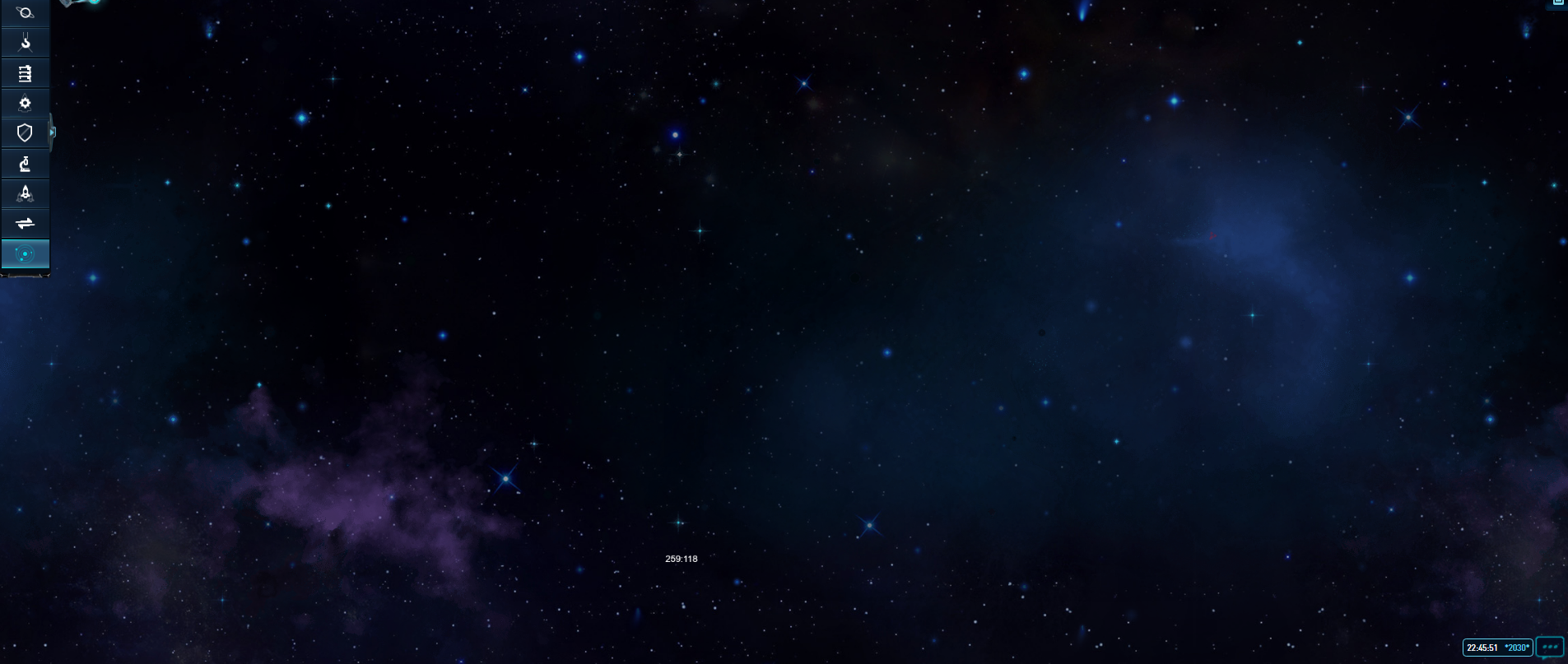 This is all I can see around my Capital now. Nothing! Had this issue before, then it was fixed, now it is back. BIG BUG ISSUE related to visibility update!
5 Января 2026 22:47:50
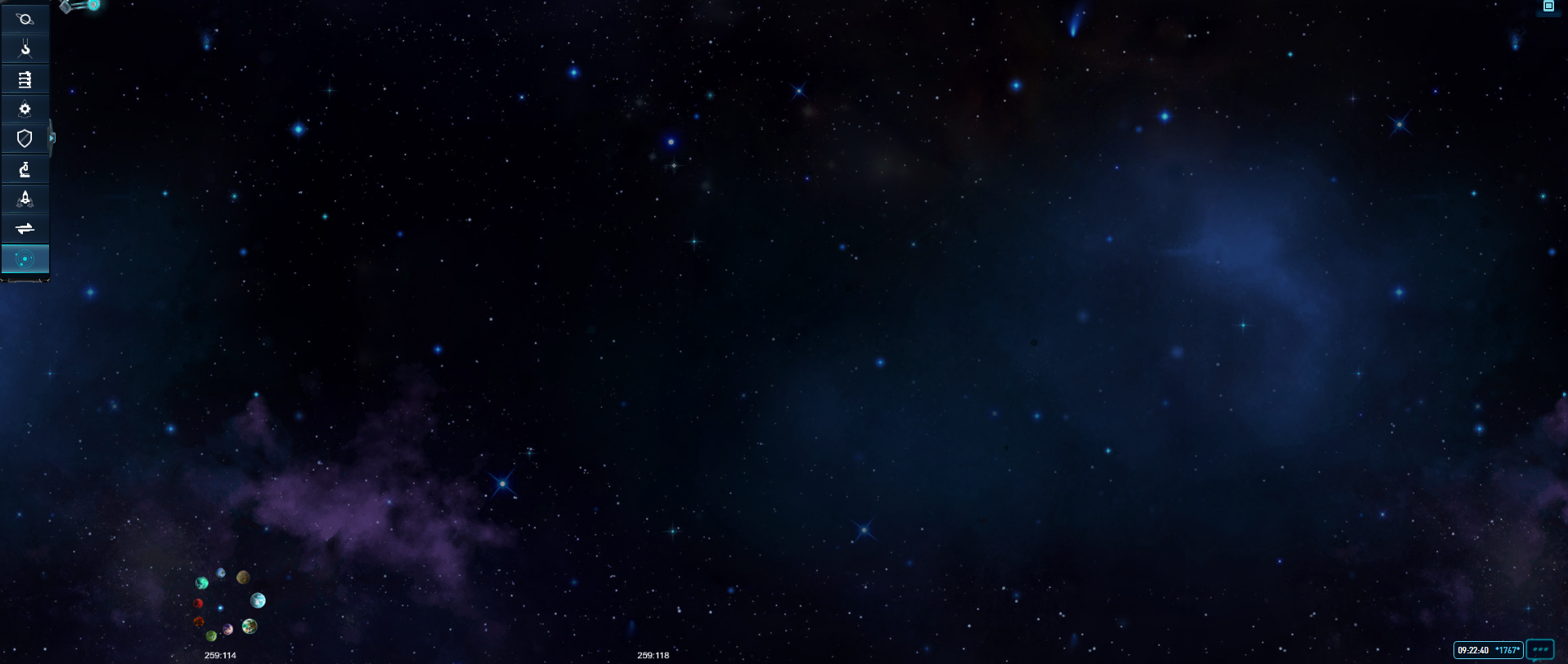 @Victoria fails to reply, Still NO Updates. USELESS. Do I need to send a DIRECT eMail to PUTIN suggesting failed Russian Honour and SHIT services from this Game? I think I will, then you Admins might randomly all disappear maybe? (Like some folks is Russia who mysteriously all "disappear"???) FIX THIS SHIT!!! OR ELSE!!!
 Awesome! I am starting the complaint process. If Admins and people making money from this site randomly disappear, this is not my fault. You need to sort this before top Government agencies intervene
 WOW!! That was fast! I have Ignition and Direct line and email to Office of the President of Russia re this issue. Hold My Beer!!!
7 Января 2026 09:27:58



This game is no longer a strategy where you can hide and cheat the enemy no matter how strong he is. now its just a speed and strength game.
I have not played the strategy for years so it works out for me. players used to spy on me often, is no more , and they can try to fly to me, but now i will see it coming.
I have not played the strategy for years so it works out for me. players used to spy on me often, is no more , and they can try to fly to me, but now i will see it coming.
24 Января 2026 09:26:53

With recent changes in visibility, after investing 45 Million! Of just minerals In sensor spores, My Zerg can see 30% less far(i beleve less than half # of systems visible) as my Toss who spent only 1M,1M,1.8M on a fleet beacon that also improves travel time. That is significantly more than 10x worse.
Terran also has longer vision @4M,6M,6M.
Whats the logic there?
Terran also has longer vision @4M,6M,6M.
Whats the logic there?
24 Июня 2026 20:30:50
Информация
Вы не авторизованы
1 чел. читают эту тему (гостей: 1)
Пользователей: 0
Claude Bot